












Best Slippers for Wide Feet: Men's and Women's Picks

Finding the best slippers for wide feet is harder than it should be. Many pairs labeled "wide" only have a roomier upper, while the sole stays standard width. The result squeezes your toes, lets your foot spill over the edges, and still slides off at the heel. This guide covers the fit features, styles, and sizing that actually help.
Quick Picks: The Best Slipper Types for Wide Feet by Need
-
Best overall: Open-back clogs, like these wide fleece clog slippers, which leave room to spread and nothing pressing at the heel.
-
Best for everyday wear: Moccasins that mold to your foot, such as these wide men's moccasin slippers.
-
Best for cold floors: Lined bootie slippers with a stretch or strap opening.
-
Best for swelling: Slippers with adjustable straps that open wide.
-
Best for trips outside: Any wide style with a grippy outsole.
How Do You Know You Need Wide Slippers?
If a slipper fits your foot's length but feels tight everywhere else, width is usually the problem.
Signs Your Slippers Are Too Narrow
-
Toes press against the sides or curl to fit.
-
Your foot hangs over the edge of the sole.
-
The sides stretch out or wear through within weeks.
-
Red marks or pressure appear after short wear.
General guidance on proper shoe fit says your toes should move freely, and that applies to slippers too.
Width, Toe Box, and Volume Explained
Width is the distance across the ball of your foot. The toe box is the front section where your toes spread. Volume is how thick your foot is through the instep.
A slipper can be wide but too shallow, or roomy on top but narrow in front. Good slippers for wide feet need both a wide toe box and the right volume. This overview of wide feet explains how width is measured.
What Wide and Extra Wide Sizing Means
Wide width sizing uses letters. For men, D is standard, 2E is wide, and 4E is extra wide. For women, B is standard, C/D is wide, and 2E is extra wide.
Many slipper brands use small, medium, and large instead, so your own measurements are more reliable than the label. You can measure your shoe size at home with paper and a ruler.
What to Look for in the Best Slippers for Wide Feet
Five features separate a slipper that truly fits from one that only looks roomy: a wide sole, enough depth, adjustable closures, a supportive footbed, and the right sole material.
A Sole as Wide as Your Foot

MEN'S WIDE FLEECE CLOG SLIPPERS
View Product
This is the most important check. A stretchy upper can feel generous, but if the footbed is standard width, your foot still overhangs the base and wears out the sides. When shopping online, check photos of the sole from below and reviews that mention width.
Extra Depth for High Insteps
Depth is the vertical room inside the slipper. If you have a high instep, a shallow slipper presses on the top of your foot even when the width is right.
Adjustable Straps and Closures
An adjustable closure, such as a hook-and-loop strap or elastic panel, lets you loosen or tighten the fit as your feet change. Straps also fix a common complaint: a slipper roomy enough for the forefoot often slides off a narrower heel. A heel strap or closed back keeps it in place.
Cushioning, Arch Support, and Removable Insoles
A memory foam footbed adds softness, but not width. Arch support helps if you spend hours on your feet at home, and a removable insole lets you use your own orthotic or replace a flattened one.
Soft Soles vs. Rubber Soles

MEN'S WIDE MOCCASIN SLIPPERS WITH MEMORY FOAM
View Product
Soft fabric or suede soles are flexible and quiet but wear thin faster, especially along the edges on wider feet. A rubber sole lasts longer, adds grip, and handles quick trips outside.
Which Slipper Styles Work Best for Wide Feet?
Open designs and soft natural materials adapt to wide feet better than structured, closed styles.
| Style | Common materials | Width forgiveness | Adjustability | Warmth | Best for |
|---|---|---|---|---|---|
| Clog or open-back | Fleece, felt, wool | Very high | Low to medium | Medium | Wide or high-volume feet |
| Moccasin | Suede, sheepskin | High, molds with wear | Low | High | Everyday indoor wear |
| Bootie with stretch or straps | Knit, fleece, sheepskin | Medium to high | Medium to high | Very high | Cold floors, swelling |
| Slide | Foam, faux fur, suede | High | Medium with straps | Low | Warm weather |
Moccasin Slippers
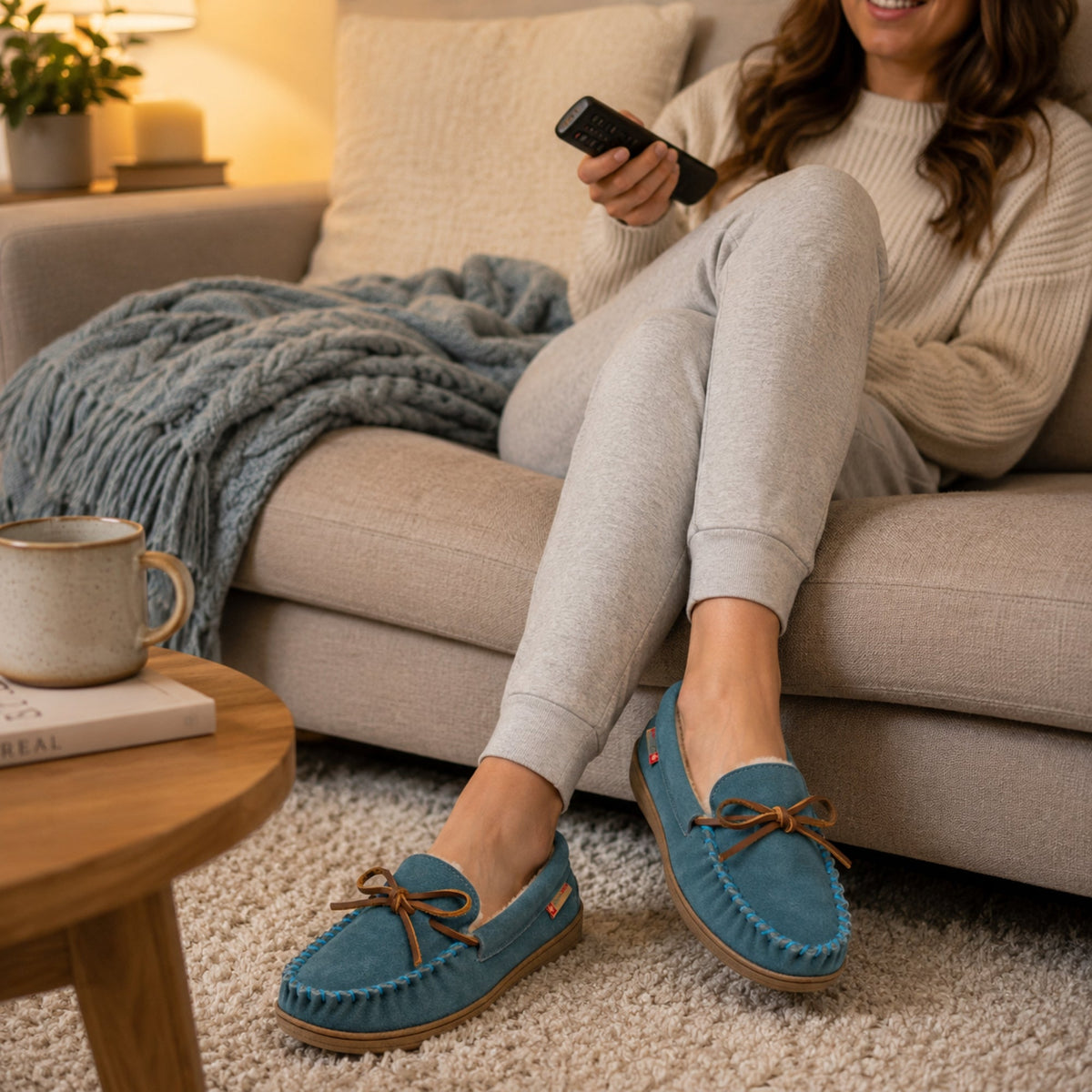
Moccasin slippers in suede or sheepskin soften and mold to your foot. Expect a few snug days before they relax.
Clogs and Open-Back Slippers
Open-back slippers are the most forgiving shape, since nothing presses at the heel. Clogs with a roomy front are also easy to slip on. The trade-off is warmth.
Bootie Slippers
Bootie slippers keep feet warmest and suit wide feet when the upper stretches or opens with a strap. Skip stiff booties with narrow openings.
Styles That Rarely Suit Wide Feet
Pointed toes, thin ballet-style slippers, and firm side walls usually pinch. If a style narrows sharply toward the toes, skip it.
Men's Wide Width Slippers: What Matters Most
Men's slippers run slightly wider than women's, but true 2E and 4E options are limited. When shopping for the best men's slippers for wide feet, look for a listed width rather than a bigger size. If you wear a 13 or above, confirm wide widths come in your size. Moccasins and clogs suit most men, and you can compare both across a range of men's slippers.
Women's Wide Slippers: What Matters Most
Fluffy uppers and faux fur can hide a narrow footbed. When looking for the best women's slippers for wide feet, choose open-toe slides, open-back designs, and flatter soles, since platforms push the foot forward into the toes. Checking the sole shape of women's house slippers before you order can save a return.

WOMEN'S CORK FOOTBED CLOG SLIPPERS
View Product
Wide Slippers for Swollen Feet
Swollen feet need room that can change, since a fixed fit may feel fine in the morning and tight by evening.
Features That Make Room for Swelling
Look for straps that open wide, stretch uppers, and open backs. Extra wide slippers with a large opening are easier to put on when feet feel puffy. If one foot swells more, some specialty retailers sell single slippers.
When to Check With a Doctor
Slippers can ease the discomfort, but they do not treat the cause. If swelling lasts, appears suddenly, or affects one foot more, talk to a doctor, since foot and ankle swelling has many possible causes.
Getting the Right Fit When You Order Slippers Online
Measure your feet in the evening, when they are largest, and fit to your larger foot. Try new slippers on with your usual socks, and walk on a hard floor before removing tags. For width advice on other footwear, see this complete guide to wide fit shoes.
Should You Size Up for Wide Feet?
Only if the larger size also has a wider sole. Sizing up a standard slipper adds length, not width, so your heel is more likely to slip. A wide width in your usual length fits better.
Do Slippers Stretch Over Time?
Suede, sheepskin, wool, and knit stretch with wear, while synthetics barely do. Insoles also flatten, so replace the pair once the sole wears thin or the footbed stays flat. Knowing how to wash slippers by material helps them hold their shape longer.
Final Thoughts
The best slippers for wide feet start with a sole that matches your foot, not just a stretchy upper. Choose a forgiving shape, add adjustability if your feet change size, and measure before you buy.
Frequently Asked Questions
What kind of slippers are best for wide and swollen feet?
Open-back or bootie styles with adjustable straps and a footbed as wide as your foot. Adjustability matters most, since swelling changes during the day.
What is a good brand for wide feet?
One that offers labeled widths such as 2E or 4E and shows the sole shape clearly in photos. Reviews that mention fit across the toes help confirm a style truly runs wide.
What do podiatrists recommend for slippers?
Foot specialists apply the same basics to slippers as to shoes. Guidance from the American Academy of Orthopaedic Surgeons on proper shoe fit stresses a shape that matches your foot and room for your toes to move. For slippers, that means a wide footbed, a secure heel, and a sole that grips.
What shoes do podiatrists recommend for wide feet?
Look for shoes that match your foot's shape, with a roomy toe box, enough depth, and the right width. This guide on how to choose the right shoes for your feet covers the details.
How snug should new slippers feel on wide feet?
They should feel close but never tight across the toes or sides. Suede and sheepskin loosen slightly with wear, but pinching usually does not go away.